
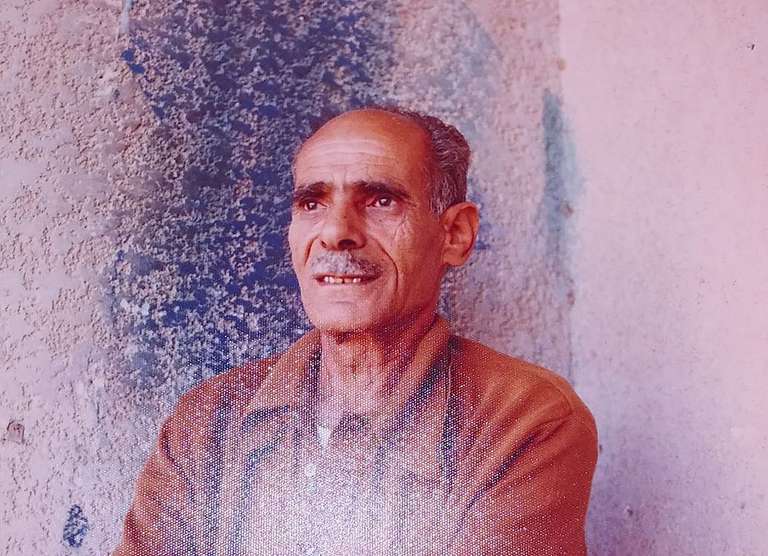
Ali was not a boy, rather a man of at least 60 years, slowed by arthritis and weather-beaten by years of desert wind and sand.
When Ali was young he had studied languages, becoming proficient in English and French as well as his native Arabic. The year was 1942 and Rommel’s troops were banging on the gates of Cairo to the west. The garrison commander in Isma’Ilya, hearing of Ali’s ability, hired him as an interpreter. And in this position Ali stayed, one commander after another, until Nasser’s troops declared war on Israel in 1957.
Ali was an intellectual, drifting from one position to another – interpreter, bank clerk, notary, legal secretary, until after Egypt retreated from the Sinai in 1973, leaving Isma’Ilya surrounded by a sea of Israelis. Throughout this time Ali raised his family, a large one of 12 children, sometimes just getting by on his wages, sometimes able to put a dollar or two aside for the future. It was a hard life, without safety nets, where you survived by your wits alone.
When the UN sent troops into Egypt in 1973, El Gala Camp, in Isma’Ilya, was selected for the main administration base for the theatre. Ali was lucky enough to win a job as houseboy to my unit, along with two of his sons. Happily he scrubbed toilets and hand washed our laundry, working from before sunrise to well into the evening each day, then walking home to his hovel on the far side of the perimeter fence. Each week we paid Ali 5 dollars, under the table, a sort of buksheesh or gift for the extra care he took with our gear and rooms.
As I worked shift in Isma’Ilya, I often had extra time during the day, with few friends to go exploring with. Many days would find me on the rooftop patio, slumped in a deck chair writing in my journal or chatting with Ali. It was here, in a battered wooden chair under the blazing Egyptian sun, that I learned of Ali’s true goal in life.
“Offendi” he would say as he pinned a tee shirt to the clothesline, “Canada is a wonderful country… One day I take my children there”.
“But it is cold in Canada” I reminded him.
Ali would smile and shake his head, “It is cold here too, at night… And I will gladly weather the cold for the opportunity.”
I would look at this tattered old man, stooped with arthritis, hanging my laundry to dry, meticulously straightening each clothespin so as to leave no creases, and marvel at his will. There was no ‘if’ with Ali, no ‘I hope’ or ‘I would’, always ‘I will’ as though by spirit alone he could achieve anything.
When my tour ended I went to Ali to say goodbye, taking him gifts of cigarettes, and some shoes and clothing for his children that I couldn’t fit into my barracks box. In my pocket was also 50 American Dollars, a special gift of thank you, more for his wisdom and friendship than for his work.
Ali met me in the hallway, head down as he swept his way toward the common area. I handed him the box of clothing, simply saying “For your children.”
Ali nodded and took the box from me and put it into his storage room. When he returned there was small tears in his eyes – tears of sadness. I had lived for a year in Isma’Ilya, save a brief time in Tel Aviv, and everyday we had chatted, often for hours. I would miss him as well – his humour and candor, his insight and wisdom, but mostly his friendship to a young soldier far from home.
I shook his hand solemnly, and slipped the money from my shirt pocket to his as I thanked him. Ali smiled gently, looking down at his pocket then up at me.
“That makes airfare number 12” he said grinning, ”Two more and we will visit you in Montreal”
As he spoke Ali placed his hand on my arm, sliding it down to squeeze my hand. “My family thanks you Offendi” he added formally, a small tear forming in the corner of his time weary eyes.
I smiled back, nodding, then turned and left quickly – hoping the desert wind would dry the tears in my own eyes before I reached the main camp.